
Thinking & perspective
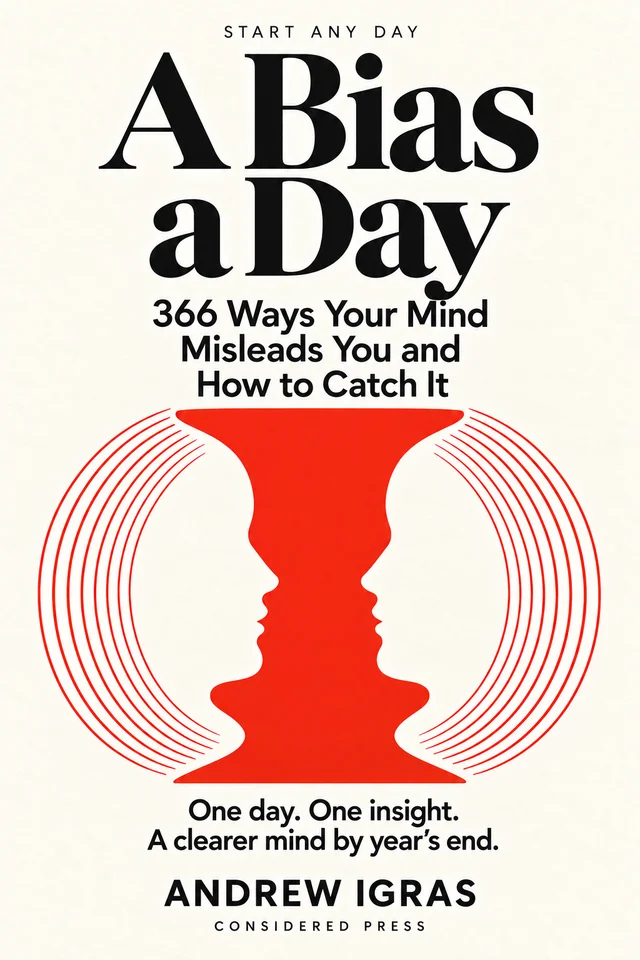
A Bias a Day
366 Ways Your Mind Misleads You and How to Catch It
Forthcoming · In preparation
We all take mental shortcuts. This forthcoming book explores how those shortcuts shape what we notice, what we believe and the decisions we make. One short lesson a day invites readers to question assumptions and see familiar situations from a different angle.
View full-size front cover ↗Read the back cover ↓
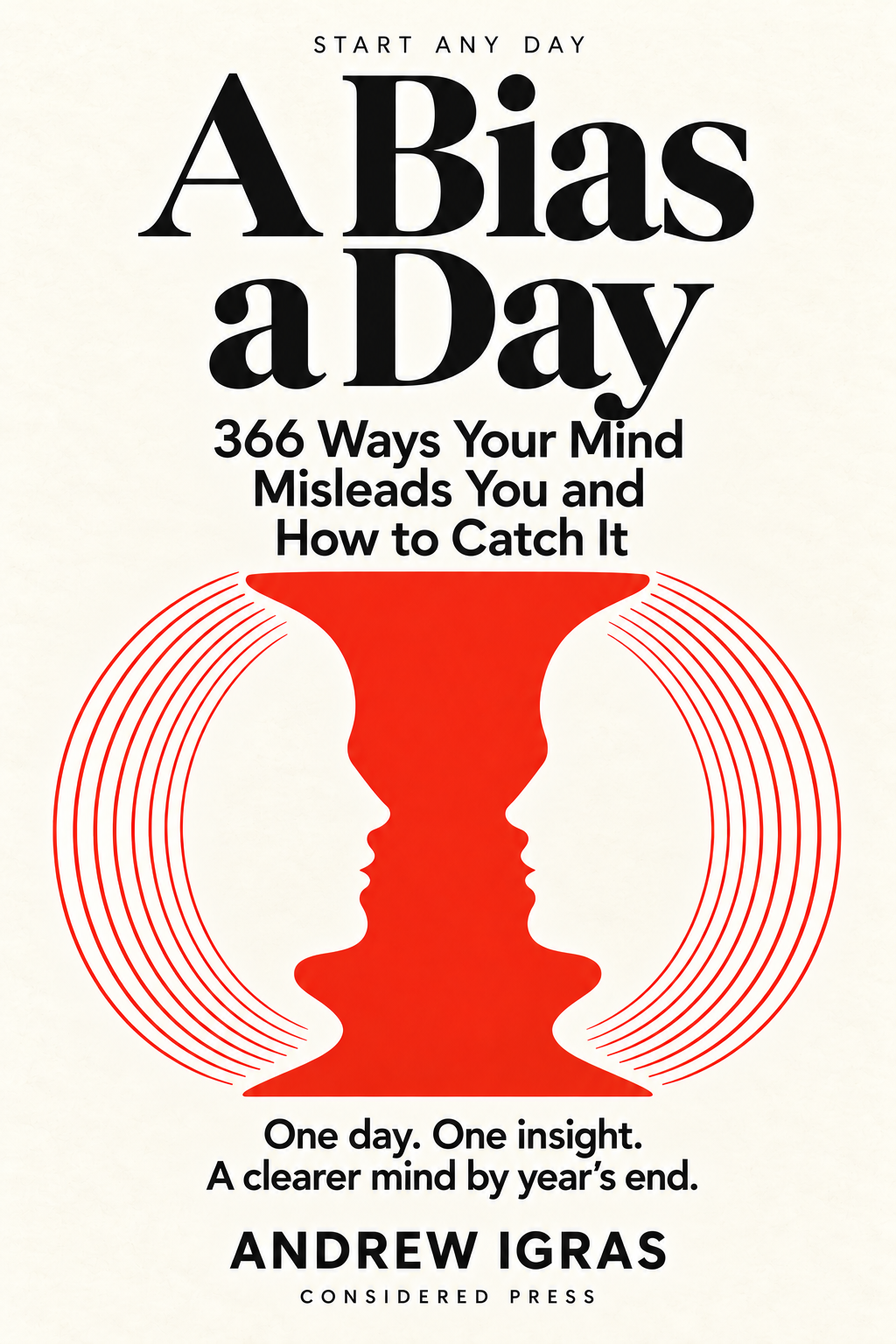
Publication date and purchase links will be announced when available. Final title, cover and contents may change.
Who it’s for
Curious readers who want to think more carefully about everyday choices, disagreements and the stories they tell themselves.
Inside the conversation
- Recognizing the mental shortcuts that influence decisions
- Questioning assumptions and considering other explanations
- Building a daily habit of more thoughtful reflection
A Bias a Day · Publisher’s sample
Which email would change your mind?
A website reading adapted from the outline for Day 2, on confirmation bias.
Imagine opening a folder of emails to find out why a project fell behind. Someone has already told you that Alex missed deadlines. You search for “late” and “overdue.” By lunch you have four messages about Alex. What search terms would have turned up the work Alex delivered on time?
All four messages may be accurate. The difficulty is the question you asked the folder. You looked for evidence of delay, found exactly that, and may now feel more certain about who caused it. Confirmation bias can enter a decision this quietly, through the choice of what to look for.
Try reading one email again. “We’re waiting on Alex” sounds fairly decisive until you see the message just below it: “I’ve finished the drawings. Can someone approve the change?” Now there are two dates worth finding: when Alex sent the drawings and when the change was approved. It is still possible that Alex caused the delay. You now have a way to check.
In two experiments on social judgment, researchers found that asking people to consider an opposing possibility did more to correct one-sided judgments than asking them to be fair. Those experiments involved opinions and impressions of people. Here, the practical use of the idea is modest: it helps you choose what to look for next.
Try it today
Pick one conclusion you feel fairly sure of. Write down the strongest fact that would make you reconsider it, then name one place you could look for that fact. If someone else has the answer, turn what you wrote into a question you can actually ask them.
What have you given yourself a fair chance to discover?
Research behind this reading · Lord, Lepper and Preston, “Considering the opposite” (1984).
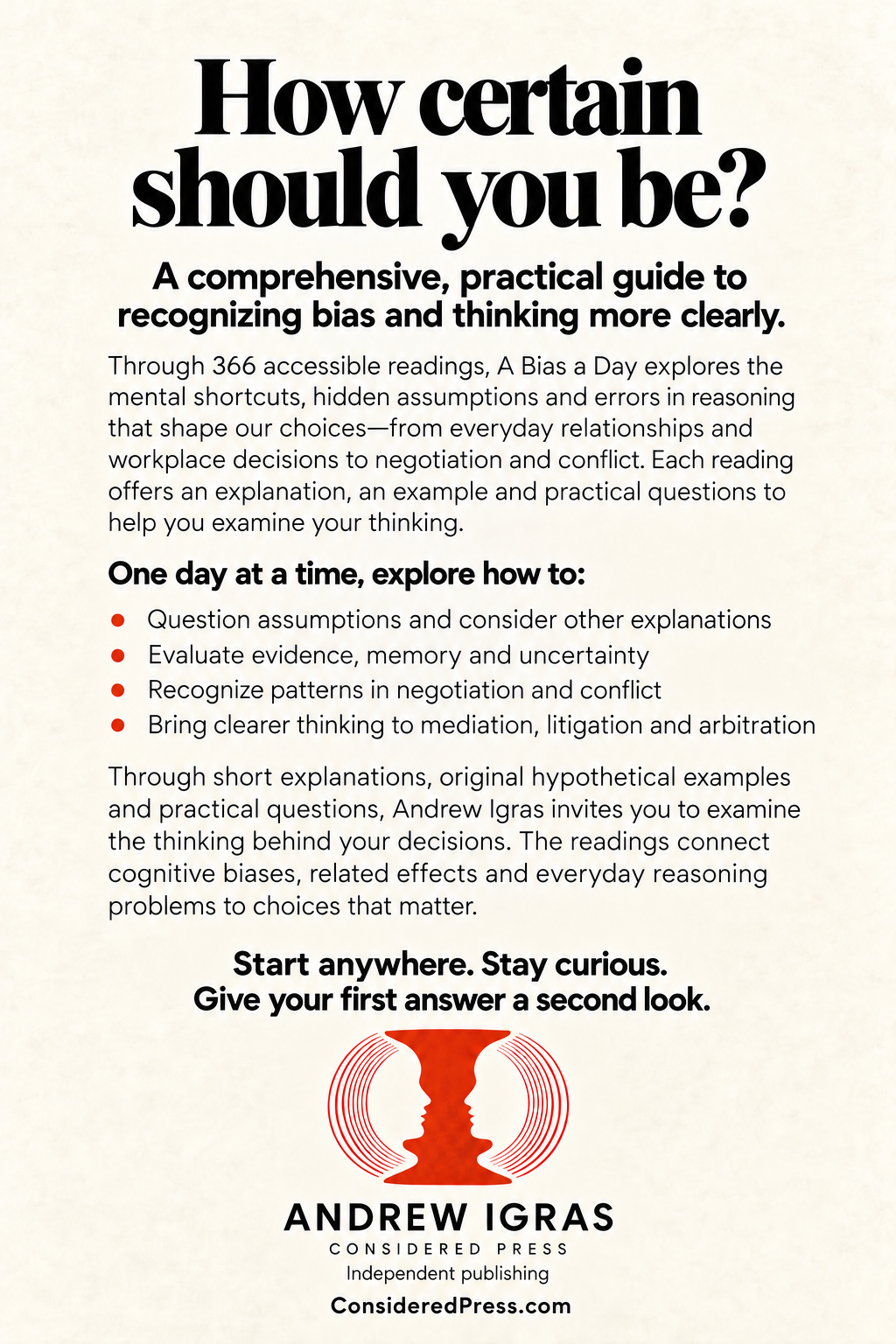
On the back cover
How certain should you be?
A comprehensive, practical guide to recognizing bias and thinking more clearly.
Through 366 accessible readings, A Bias a Day explores the mental shortcuts, hidden assumptions and errors in reasoning that shape our choices—from everyday relationships and workplace decisions to negotiation and conflict. Each reading offers an explanation, an example and practical questions to help you examine your thinking.
One day at a time, explore how to:
- Question assumptions and consider other explanations
- Evaluate evidence, memory and uncertainty
- Recognize patterns in negotiation and conflict
- Bring clearer thinking to mediation, litigation and arbitration
Through short explanations, original hypothetical examples and practical questions, Andrew Igras invites you to examine the thinking behind your decisions. The readings connect cognitive biases, related effects and everyday reasoning problems to choices that matter.
Start anywhere. Stay curious. Give your first answer a second look.
Andrew Igras
Considered Press
Independent publishing
ConsideredPress.com